Showing posts with label Book reviews. Show all posts

Friday, May 8, 2020

Harchali – one of the first quarterly literary magazines in Tharu language


Harchali - one of the first quarterly literary magazines in Tharu language

An interview with Sagar Kusmi, Editor, Harchali, one of the first quarterly literary magazines in
Tharu language.

Please tell our readers about Harchali quarterly, the literary magazine you’ve been publishing. 
Harchali literary quarterly is purely dedicated to literature. We started publishing it from 2072 Baishakh after formally registering with the District Administration Office in Kailali on 2071 Falgun 28 (Registration no. 169). I (Sagar Kusmi) am the Chief Editor and Publisher of the magazine.  This is the only magazine in Tharu language being published regularly from Dhangadhi, Kailali. This magazine reaches out to audiences in Kailali, Kanchanpur, Bardia, Banke, Dang, Surkhet, Kapilvastu, Rupandehi, Nawalparasi, Kathmandu and Uttar Pradhesh in India.

Sagar Kusmi, Editor, Harchali
Please tell us about yourself.
My father is a farmer and I come from Dakshin Terhi Village of Kailari Rural Municipality, Ward no. 8. Currently, I have been living in Dhangadhi and dabbling in literary journalism. Along with journalism, I write Tharu folktales and folklores. Two of my collections of ghazals – hastakshar and futal pokri, and a collection of muktak (lyrical poems), have been published. I am working towards publishing collections of folktales, folklores, Haiku, ghazals, and investigative essays. Especially, I like to write about Tharu language, literature and culture.

Is there any reason behind naming the magazine ‘Harchali’?     
I am proud to be a Tharu. Thousands of Tharu words have been forgotten and are in the process of being forgotten. That’s why I chose this name from one of the Tharu words that denotes what one does during their leisure. So that people use their free time and we are able to conserve the Tharu language, literature and culture, and document the articles written in Tharu language.

What inspired you to publish this quarterly magazine?
I was interested in literature since my childhood. I used to write poems. I had the habit of reading magazines of all kind. While I was in school, they published a wall magazine. I used to send my poems for the magazine. In my village while I was a club president, I used to publish a wall magazine called ‘Fulariya’. Later, a magazine called ‘Nisrau Saptahik’ started being published from Dhangadhi. My poems, ghazals, muktak used to be published in that magazine as well. Following this, Hamar Pahura semi-weekly (later daily) used to publish my ghazals, muktak and articles. I gained a lot of experience working for Hamar Pahura. After working as Kailali representative of Lawa Daggar quarterly, I set out on my own to publish Harchali literary quarterly magazine.

What types of articles are published in Harchali and how can one send articles to it?
As this is a literary magazine, we publish all sorts of literary creations like articles, poems, ghazals, muktak, stories, memoirs, short stories, novels, etc. Articles that convey messages, raise awareness and investigative articles are given priority. Articles containing hate speech, accusation and written solely for entertainment and about love are not published. Articles received via our email ID harchali3@gmail.com are published only after reviewing.

What are your plans to reach more audience in the coming days?
We are trying our best to improve the quality and reach more audience. We look forward to suggestions, inputs and insights from our readers to improve the publication. We are also planning to reach our audiences in other cities and villages. We are working to make it monthly. Also we’re in the process of adding more columns and publishing the inside pages in multi-colour. Rest depends on readers and supporters.

Finally, would you like to say anything to our readers?
This is not my magazine. A magazine is a common learning ground for all. Please support us. Give us feedback and suggestions. Don’t stay idle. Write something and send them to us.

Note: The title has been changed from earlier 'Harchali – the first quarterly literary magazine in Tharu language'. 'Aainkh' is the first quarterly literary magazine in Tharu language.

Sunday, May 3, 2020

थारू भाषाको प्रथम साहित्यिक त्रैमासिक पत्रिकामध्ये एक "हरचाली"


थारू भाषाको प्रथम साहित्यिक त्रैमासिक पत्रिका मध्ये एक "हरचाली"का सम्पादक सागर कुस्मीसँगको अन्तर्वार्ता। 

तपाईंले प्रकाशन गर्ने हरचाली त्रैमासिकबारे केही भनिदिनुस् । 
हरचाली साहित्यिक त्रैमासिक थारू भाषाको विशुद्ध साहित्यिक पत्रिका हो । जिल्ला प्रशासन कार्यालय कैलालीमा २०७१ फागुन २८ गते विधिवत् रूपमा दर्ता (दर्ता नम्बर १६९) भई २०७२ वैशाखदेखि प्रकाशन शुरु गरिएको हो । यसको प्रकाशक तथा प्रधान सम्पादक म आफै (सागर कुस्मी) छु । यो पत्रिका कैलाली जिल्लाको धनगढीबाट हालसम्म एकमात्र नियमित प्रकाशन हुँदै आएको थारू भाषाको पत्रिका हो । यो पत्रिका कैलाली, कंचनपुर, बर्दिया, बाँके, दांग, सुर्खेत, कपिलवस्तु, रिपन्देही, चितवन, नवलपरासी, काठमाडांै, र भारतको उत्तर प्रदेशसम्म पुग्छ ।

सम्पादक सागर कुस्मी
तपाईंको बारे पनि केही भनिदिनुस् न ।
म एउटा किसानको छोरा हुँ । म कैलारी गाउँपालिका वडा नम्बर ८ दक्षिण टेंर्ही गाउँको बासिन्दा हुँ । साहित्यिक पत्रकारिता गर्ने क्रममा हाल म अहिले धनगढीमा बस्छु । पत्रकारितासँगै म थारू लोककथा, थारू लोकगीतमा बढी कलम चलाउँछु । मेरा दुई वटा हस्ताक्षर र फुटल पोक्री गजल संग्रह र एउटा मुक्तक संग्रह प्रकाशित छन् । लोककथा संग्रह, लोकगीत संग्रह, हाइकु संग्रह, गजल संग्रह र खोज तथा अनुसन्धानमुलक निबन्ध संग्रह प्रकाशनको तयारीमा रहेको छ । म धेरैजसो थारू भाषा साहित्य र संस्कृतिमा कलम चलाउन रुचाउछुँ ।

यसको नाम हरचाली राख्नुको कारण ?
मलाई  थारूको सन्तान भएकोमा गर्व लाग्छ । थारू सामुदायमा अझै पनि हजारौं शब्द लोप भैसकेका छन् र हुँदै छन् । त्यसैले एउटा शब्द छानेर यो नाम जुराएको हुँ । खाली समयलाई सदुपयोग होस् र थारू भाषा साहित्य, संस्कृतिको संरक्षण सम्वद्र्धन होस्, थारू भाषाको लेख रचना दस्तावेजिकरण होस् भनी यो नाम जुराएका हौं ।

यो त्रैमासिक निकाल्ने प्रेरणा कहाँ र कसरी पाउँनु भयो ?
मेरो बचपनदेखि नै साहित्यमा रुचि थियो । म सानैदेखि कविता लेख्थें । जस्तो सुकै पत्रिका पनि खोजी खोजी पढ्ने बानी थियो मेरो । स्कुलमा म पढ्दा खेरी भित्ते पत्रिका निस्किन्थ्यो । त्यसमा म पनि कविता पठाउँथे । गाउँमा क्लबको अध्यक्ष हुँदा पनि "फुलरिया" भन्ने भित्ते पत्रिका निकाल्थें । त्यसपछि धनगढीबाट "निसराउ साप्ताहिक" भन्ने पत्रिका निस्किन्थ्यो । त्यसमा पनि मेरा कविता, गजल, मुक्तक छापिन्थे । यसपछि "हमार पहुरा" अर्ध साप्ताहिक (पछि दैनिक) पत्रिकामा मेरा गजल, मुक्तक, लेख रचना छापिन्थें । हमार पहुरा पत्रिकामा काम गरेर पनि धेरै अनुभव बटुलेँ । दाङ डेउखुरी बाट निस्किने "लावा डग्गर" त्रैमासिक मा कैलाली प्रतिनिधि भएर काम गरिसकेपछि आफैमा एउटा प्रकाशक भएर पत्रिका निकाल्ने हिम्मत र आँट आयो । यसरी म अहिले हरचाली साहित्यिक त्रैमासिक पत्रिका कैलालीबाट नियमित निकाल्न सफल भएँ ।

यसमा कस्ता कस्ता रचना प्रकाशन गरिन्छ र आफ्ना रचना प्रकाशन गराउन कहाँ कसरी पठाउँनुपर्छ ? 
यो एउटा साहित्यिक पत्रिका भएकोले यसमा साहित्यिक लेख रचना, कविता, गजल, मुक्तक, कथा, संस्मरण, लघुकथा, उपन्यास प्राय सबै विधाका रचना छापिन्छन् । सन्देशमुलक, जनचेतनामुलक, खोज तथा अनुसन्धानमुलक रचनालाई बढी प्राथमिकता दिईन्छ । कसैलाई गाली गलौज, आरोप, र नितान्त मनोरञ्जनात्मक माया प्रेम सम्बन्धि रचना छापिदैन । पत्रिकाको इमेल आइडी  harchali3@gmail.com मा आएका रचनालाई छनौट गरेर मात्र छापिन्छ ।

आगामी दिनमा यसलाई कसरी अगाडि बढाउने र अझ बढी पाठकमाझ पुर्याउन के के गर्ने सोच राख्नु भएको छ ?
हामीले आफ्नो तर्फबाट सक्ने जति गरेकै छौं । यो पत्रिकालाई अझ स्तरीय बनाउन पाठकहरूको सल्लाह सुझाव, प्रतिक्रियाको आशामा बसेका छौं । आगामी दिन शहरदेखि गाउँसम्म पुर्याउने योजनामा छौं । त्रैमासिकबाट मासिक बनाउन रात दिन खटिरहेका छौं । थप स्तम्भ राखी, भित्री पृष्ठ मल्टी कलरमा प्रकाशन गर्ने क्रममा छौं । बाँकी जिम्मा पाठक र सहयोगीको हुनेछ ।

अन्त्यमा हाम्रा पाठकलाई केही सन्देश दिन चाहनुहुन्छ ?
यो मेरो मात्र पत्रिका होइन । पत्रिका भनेको सबैको साझा विद्यालय हो ।  यसलाई सबैले माया, ममता, सहयोग गर्नुस् । चित्त नबुझेको ठाउँमा सल्लाह सुझाव दिनुस् । खाली नबस्नुस् । केहि न केहि अवश्य लेख्नुस् र हामीलाई पठाउनुस् । सबैलाई हार्दिक शुभकामना।

नोट: यस अन्तर्वार्ताको शीर्षक "हरचाली -- थारू भाषाको पहिलो साहित्यिक त्रैमासिक पत्रिका" परिवर्तन गरिएको छ। थारू भाषाको पहिलो साहित्यिक त्रैमासिक पत्रिका "आँइख" हो।

Tuesday, November 12, 2019

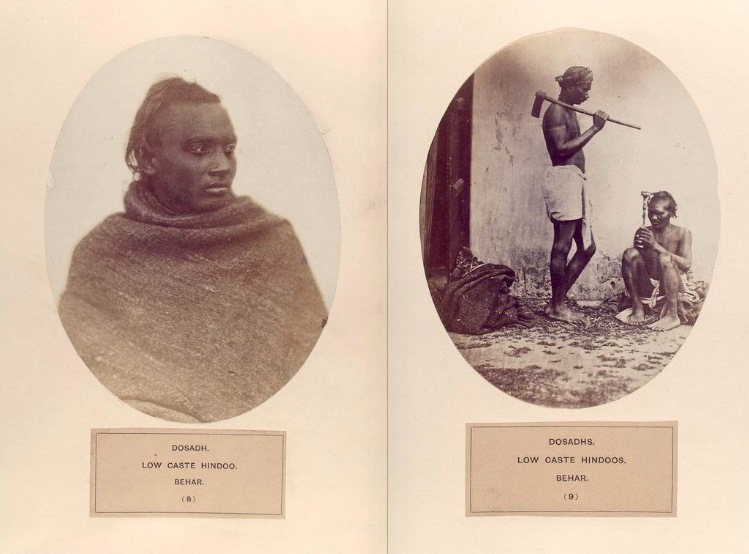
Nepalis as profiled by the book ‘The People of India’

The New York Public Library Digital Collections has released The People of India in the public domain. You can now view, download and use the images from the rare book.

Cover of the book 'People of India'. Image from the New York Public Library Digital Collections

Edited by J. Forbes Watson and John William Kaye, the book comprises three volumes and has a collection of photographic illustrations with descriptive letterpress. Published in the year 1868 by the India Museum, the book gives you a rare view of the races and tribes of that time.

Profiled in page 117 of the third volume of the book, here’s an image of a Tharu couple from Shahjahanpur, now in Uttar Pradesh of India. The writer duo describe the couple as ‘Tharoos. (Low Caste Hindoos: Probably Aboriginal.) Shahjehanpore.’

Image from the New York Public Library Digital Collections

Further, you can see images of people from Nepal (written ‘Nipal’) and the neighbouring Indian states.

Image from the New York Public Library Digital Collections

Image from the New York Public Library Digital Collections

Image from the New York Public Library Digital Collections

Image from the New York Public Library Digital Collections

Image from the New York Public Library Digital Collections

Image from the New York Public Library Digital Collections

Image from the New York Public Library Digital Collections

Image from the New York Public Library Digital Collections

Image from the New York Public Library Digital Collections

Image from the New York Public Library Digital Collections

Image from the New York Public Library Digital Collections

Image from the New York Public Library Digital Collections

Image from the New York Public Library Digital Collections

Image from the New York Public Library Digital Collections

Image from the New York Public Library Digital Collections

Image from the New York Public Library Digital Collections

Note: All the above images have been arranged in alphabetical order.

Friday, March 10, 2017

Compiling typical and original Tharu words before they disappear

Tharu Welfare Society of Deukhuri, Dang is in the final stages of publishing a dictionary of western Tharu language.

Sanjib Chaudhary from the Voice of Tharus spoke with the team about the dictionary, its importance and how the team is working to complete the tedious task of collecting the peculiar Tharu words which are on the verge of vanishing.

Here are the excerpts of interviews with Uday Raj Aaley, the editor and resource person; Goma Kalathoki, the phonetic editor and Bal Govind Chaudhary, the coordinator of this task of compiling the dictionary.

Uday Raj Aaley

Voice of Tharus (VOT): Tell our readers about the Tharu dictionary and how you are collecting and compiling the Tharu words.

Uday Raj Aaley (URA): Language is the key symbol of identity and to preserve and develop a language, a dictionary is a must.

First of all, I would like to thank Tharu Welfare Society of Deukhuri, Dang and its board members for giving me the responsibility of an editor and resource person to compile this dictionary.

I am working in a team – Tharu scholars Sher Bahadur Chaudhari, Rajendra Prasad Chaudhari and Lilagambhir Tharu have been employed to collect Tharu words. Some words have been compiled from secondary sources such as books, epics, folk tales, magazines, newspapers, etc.

We have decided to include Tharu words of different genres in the dictionary. It comprises Deukhuriya and Dangoriya Tharu words which are spoken in different districts of western Nepal. The Tharus are rich in culture and they have many typical words for cultural and ritual activities.

It’s a great challenge because many typical and original Tharu words are disappearing day by day. The dictionary has archaic as well as new words which are popular and used in day to day life.


VOT: What is the scope of the dictionary? How many people do you want to reach with the publication of the dictionary?

URA: The trilingual dictionary – Tharu- English-Nepali – will help Tharu, Nepali and English speaking readers. There are dialects and some variations in the Tharu language spoken in different parts of Terai region in Nepal.

I think the dictionary will be helpful and valuable for Tharu people, scholars, researchers, teachers, students, trainers, textbook writers, journalists, language activists, social workers and those who want to study about Tharus and Tharu language.

At the same time, the dictionary will contribute to preserve Tharu language. The Tharu Welfare Society has networks with Tharu people and concerned departments. It will manage the distribution of the dictionary.

VOT: How do you think it will help the target audience that you have in mind?

URA: I have been doing research on Tharus of western Nepal. The loss of language harms the linguistic and cultural diversity of the country and the world as well.

Many of the languages spoken in Nepal are confined to their oral traditions. There is need to develop a policy to impart basic education in mother tongue. It is through his/her mother tongue that every human being first learns to formulate and express his/her ideas about himself/herself and the world.

The ‘one nation- one language’ policy was adopted during Rana and Panchayat periods in Nepal. After the reestablishment of democracy, ethnic organisations have been playing an active role in creating awareness about promoting and preserving their mother tongues including their cultural identities. There should be special provisions to indigenous peoples to retain their languages and cultures.

Different languages enhance different ways of expressing experiences, thoughts, feelings, and aesthetics. To impart knowledge through the medium of his/her own language first, where the dictionary is available, his/her own mother tongue can then be used creatively.

I think the state and the ethnic groups have obligation and are equally responsible to enable and retain their languages and cultures.

Goma Kalathoki

VOT: What are the difficulties did you face while transcribing the Tharu words into International Phonetic Alphabet (IPA)?

Goma Kalathoki (GK): The Tharu dictionary which is going to be published is a great work for the Tharu community as well as other readers. I was employed as a phonetic editor by Uday Raj Aaley, the editor and resource person for the dictionary and Tharu Welfare Society to transcribe the compiled Tharu words. I am very much happy because I have tried to complete the task sincerely.

There are many difficulties and challenges in any work you do and I have faced difficulties doing this. I am a student of English and this opportunity has taught me the importance of language and its micro elements.

Tharu language does not have its own script. Devnagari script has been used throughout as written script for Tharu words. It should also be noted that Tharu language does not have all the sounds of the Nepali language. Therefore, some vowels and consonants of the Nepali language are omitted. This is followed by the phonetic transcription, transcribed Tharu word as it is pronounced. However, writing through the Devnagari script, we found that Devnagari lacks graphemes.

VOT: Did you find any peculiarity in the Tharu words? Can the Tharu words be compared with words from other languages?

GK: Tharu language is spoken by the Tharu people of Terai region in Nepal. The Tharus have their native words to speak. There are some variations in the Tharu language, but the root words are similar.

In Dang district, Deukhuriya and Dangoriya dialects are spoken. Tharu language of mid-western region, especially Deukhuri where I was born, has a different dialect which is influenced by Awadhi and Nepali because a few words are borrowed from them. A couple of years ago Tharu people used to speak their mother tongue naturally. Of course every language has some peculiarities and exceptions from the normal patterns. For instance, Deukhuriya Tharu say ‘neimaza’ and Dangoriya Tharu say ‘nimaza’ for ‘not good’.

New generations are using Nepali and English words in their conversation. Typical Tharu words are disappearing gradually. I think their native words should be preserved for future. The dictionary will preserve these words, but at the same we have to encourage new generation to speak their language in their daily life.

Bal Govind Chaudhary
VOT: Why and how did the idea of preparing a Tharu language dictionary come up?

Bal Govind Chaudhary (BGC):  Thank you for your question and giving an opportunity to share our work. First of all, I'm a responsible member of Tharu society and now secretary of Tharu Kalayankarini Sabha (Tharu Welfare Society) Deukhuri, Dang. As a secretary I would like to talk about some activities of Tharu Welfare Society. The Tharu Welfare Society has been working to promote language and culture. It has been publishing a quarterly journal named ‘Hamar Sanghariya’ (Our friend). To preserve and promote Tharu culture, it has been organising cultural programmes such as seminars and interaction programmes related to Tharu culture. It has also been organising cultural handicraft training to preserve age-old tradition.

From east to west, Tharus are divided into many groups according to their spoken language. eastern Tharu language is influenced by Maithaili, western Tharu language is influenced by Bhojpuri and Awadhi, and mid-western and far-western Tharu language is believed to be the original Tharu language but there are variations.

Nowadays, most of the Tharu words are disappearing. Because they use other language for communication to be civilised in the community (this is what they think!) so they are forgetting their own language. Terai is like a ‘melting pot’ and heterogeneous owing to the settlement of people migrating from hills and southern parts. Different kinds of people belonging to different caste and ethnic groups live in the Teari. Due to the diversity in settlement, Tharu language is at risk. Thus, it is necessary to preserve and promote it. And we ourselves are responsible for this.

At the same time, people want to know Tharu language for trade, politics, social works, communication and so on. They want to study about Tharu culture, their rites and rituals. Without a Tharu dictionary it seems to be difficult. There are not sufficient linguistic documents and supporting materials to study about Tharu culture. Because of lack of study materials, many languages are disappearing from the world. Tharu language is also at risk. So the idea of publishing a Tharu language dictionary came up.

VOT: Who are your target audience?

BGC: In my opinion, our target audiences are researchers, politicians, businessmen, teachers, social workers, personnel and students.

VOT: What is your next step after publishing the dictionary?

Team: After publishing the dictionary we have planned programmes to publish Tharu grammar, cultural documentary, newspaper, and research publications.

VOT: How do you plan to disseminate and share the learning of preparing the dictionary?

Team: We have planned to disseminate this dictionary through our networks, book sellers, and team members. And we have planned a ‘door to door dictionary campaign’.

Wednesday, September 21, 2016

Did Tiger Take the Rain?

I was surprised and happy to get an email from Dr Charles Norris Brown, an adjunct faculty from the University of Vermont. I had been leading the Year of the Tiger campaign in WWF before leaving the organisation to join SNV Netherlands Development Organisation. He wanted to write a book about conservation and tigers.

I connected him with WWF Nepal’s communication team and went with him to hear his plans at WWF Nepal office. His plans were just plans at that time. The communication team assured him of the support for his book – but it was not possible to fund his venture.

So, Charles and I, with support of my friend Shree Narayan Chaudhary went on a whirlwind trip of western Nepal. We were lucky to find support from many other friends in the field –Nandalal Rana and Bhaktaraj Rana among others.

We visited villages in Kailali, Kanchanpur and Dang collecting stories about tigers and conservation from Tharu elders. Charles had been clicking pictures and drawing sketches of little children while jotting down the stories in his notebook – told in Tharu language, translated in English by me.

Charles, on his return to the US, spent a sizable amount of his time writing a children’s storybook based on the stories collected from the western Nepal.

He again returned to Nepal the following year to meet with the communities once again and show them the draft of the book.

After several revisions, the book ‘Did Tiger Take the Rain?’ has come out in its present form. The book is being released this October by Green Writers Press.

Cover of the book 'Did Tiger Take the Rain? Used with permission.


In his website, Charles writes:

[…] But it is not the fate of the tiger itself that raises concern. Like the ubiquitous canary in the mine, what happens to the tiger is intimately connected with what happens to the habitat in which it lives, and the habitat in which the tiger lives is, in its turn, finely connected with the sustainability of the human biosphere. As the children in the book note: we all breathe the same air.
The problem addressed by the book is that a dry and hot climate could be the result of the cutting of the forests which upsets the naturally occurring precipitation cycles. The solution: to stop cutting the forests or at least be certain that new forests are allowed to thrive. The challenge is to produce a children’s book that shows both determination in the face of obstacles as well as the hope that efforts will bear fruit in a practical way. The strategy in this book is to share a story around raising a question, then actively seeking an answer and finding a way to resolve the problem through action. The book aims to develop a story that will help children from different cultures share a means to become empowered to take action that will hopefully make the world a better place. […]

Charles, an anthropologist by profession, was an artist from young age. He earned his PhD from Lund University in Sweden in Sociology and Social Anthropology. His post-doctoral work took him from India, to Borneo, to Appalachia, and to Canada where his focus was (and still is) on people of the forests and on their place in the health of the ecosystem.

He says:

[…] The message of conservation needs to focus among communities – the people who live near the forests (and its animals such as the tiger) as well as those far away. All of us share this world with the tiger – and not only the tiger. We share this world with all living things. We breathe the same air. We feel the same wind. How could I combine my approach to anthropology with my art to create messages for children? […]

Thus, the book ‘Did Tiger Take the Rain?’ was born.

Read an excerpt of the book from Amazon.

Thursday, November 21, 2013

Book Review – The Return of the Mauryas

History is written by the winners and the losers are lost in transition. The book The Return of the Mauryas penned by Subodh Kumar Singh throws light on the glorious history of Tharus. In his book, he claims that the ancestors of Shah Kings descended from the Magar community and the first kings of the Shah dynasty had matrimonial links with the Sen Kings of Nepal, who were actually Tharus.

"The Magar Kings had the tradition of marrying the daughters of Tharu Kings. Prithvi Narayan Shah himself married a Tharu princess called Kaushalyavati," Singh claims.

"During his last days, Prithvi Narayan Shah, the founder of the Shah dynasty, gathered all his relatives, courtiers and officers around him and advised them on how to conduct their work and themselves. On his death bed, the king said that he was a Magar King."

The Return of the Mauryas sheds light on the Sakya Mauryas of Tharu origin that issued Sakyamuni Buddha and Emperor Ashoka. It elucidates how once again the descendants of the Buddha and Ashoka emerged as the rulers of the entire Terai and Nepalmandala after the fall of Mauryan Empire.

The author says that he found out that the enigmatic Tharus had a great history, but its glorious past was mystified after they converted themselves to Rajput in the seventh and eighth century Christian era.

In the second chapter of the book, he explains about the rise of Rajputs and how the Thervadin Tharus, the classical Kshatriyas, of the ancient past took the title of Singh and Sen in the medieval age. In the third chapter, he talks about the Sen Kings of the Terai, who had matrimonial relation with the Shah Kings of the hills. According to him, the historical facts reveal that the Shah Kings and the Sen Kings had married among themselves right from the inception of the House of Gorkha. He mentions that all the Shah Kings from Darvya Shah to Girvana Yuddha Bikram Shah were born from a Tharu mother.

The book has been reviewed by esteemed newspapers and news agencies. Below are the links to the reviews garnered by the book.

The Times of India

Book flattens Nepal king's divine myth

Zee News

Nepali author demolishes King's blue blood claim

The Rising Nepal

The Return of the Mauryas

Avail a snapshot of the book by clicking the link below.

Prints Asia 

Saturday, June 1, 2013

Book Review – The Tharu Barka Naach: A Rural Folk Art Version of the Mahabharata

The Tharu Barka Naach: A Rural Folk Art Version of the Mahabharata is probably the first book on Tharu folk dance, written in English for international audience. If you have not yet heard of the book, read the review by James Laine of Macalester College.  

The Tharu Barka Naach: A Rural Folk Art Version of the Mahabharata
Kurt Meyer and Pamela Deuel, eds. Los Angeles: Deuel Purposes, 1998. 120 pp.
Reviewed by: James Laine, Macalester College

This book will have two audiences, scholars interested in the Tharu culture of Nepal, and scholars interested in regional variations of the classical Sanskrit epic.

For the first group, the book provides a version of the Mahabharata that was reconstructed from manuscripts collected by an illiterate farmer over several decades and passed on to his son in 1970. The farmer, Rup Lal was also responsible for organising performances of the Barka Naach ("big dance") on numerous occasions from 1922-1963. One might presume that the tradition of performance had been neglected for some time when Rup Lal undertook his work of reconstruction and preservation, but unfortunately, the present book does not provide any information about whether the text in its current form, or its ritual performance, preserves something quite old, or simply purports to revive the timeless tradition. The editors of this volume, Kurt Meyer and Pamela Deuel, discovered Rup Lal's son in 1994 and worked with him to raise the funds necessary for a complete performance in 1998. That performance and this book, which translates the ten song cycle that tells the Tharu version of the great epic, are thus part of an effort to preserve a culture which is not, in fact, surviving. Although it deserves more study, this text provides a window on aspects of Tharu culture that are specific to the Dangaura Tharu who inhabit the Dang/Deukhuri district.

For the second group, the epic story is full of distinctive regional variations. In this brief retelling of the epic story, the most striking feature is the central role of Bhima, who is praised throughout as the greatest of heroes. The celebration of Bhima makes the text a truly martial epic rather than an epic modified by brahmanic religious concerns, and consequently, neither Arjuna nor Yudhisthira is given prominence. There are charming twists on the story, for example in the tale of the village of Ekachakra, when Bhima goes to meet the demon who annually demands of the village folk a human sacrifice. (In this telling, the story is blended with the story of the five brothers going to a pond for water where they are accosted by a crane who will grant water only in exchange for answering his riddles, Mahabharata 3.296). In the Tharu version, Bhima allows himself to be swallowed whole before exploding out of the demon. He returns home and is unrecognized by his mother before she performs a ritual of sprinkling her breast milk on his mouth. Other Tharu variations include the assumption that Kunti is the mother of all five Pandavas (rather than mother of only three), and that the secret knowledge which allows the escape from the House of Lac comes from Sahadeva (and not from Vidura).

Dinesh Chamling Rai has provided a fluent translation of the collected manuscripts. Scholars may be put off by small inconsistencies in transliteration (Vidur; Bidur; Shadev; Sahadeva) or the lack of notes which might explain confusing passages (why, for example, is the demon of Ekachakra referred to as Kunti's brother, the Pandavas' uncle? p.26). The value of the book, however, lies not in the scholarly advances it makes, but in the fact that it provides a serviceable translation of a preserved text of a revived tradition.

Weblink
http://digitalcommons.macalester.edu/cgi/viewcontent.cgi?article=1631&context=himalaya

Read a more detailed review by Pradip Bhattacharya
http://tharuculture.blogspot.com/2008/01/tharu-barka-naach-of-dangauras.html

Thursday, May 30, 2013

Book Review - The Great Sons of the Tharus: Sakyamuni Buddha and Emperor Asoka

The book review of The Great Sons of the Tharus: Sakyamuni Buddha and Emperor Asoka published by The Sunday Tribune throws light on the plight of the Tharus highlighted by the book. Thanks go to Sudeshna Sarkar of the Indo-Asian News Service (IANS) who has meticulously reviewed the book.

Republished from The Tribune

No light for caste away Tharus
Sudeshna Sarkar

Ashoka Pillar in Lumbini, the birthplace of Gautam Buddha
In The Great Sons of the Tharus: Sakyamuni Buddha and Emperor Asoka, Nepali author Subodh Kumar Singh, contends that the Buddha belonged to a community that is today living as bonded labourers.

He belonged to a clan of kings and founded one of the most vibrant religions in the world—and yet, the descendants of the Buddha have become outcasts in Nepal, a new book says.

The Great Sons of the Tharus: Sakyamuni Buddha and Emperor Asoka, written by Nepali author Subodh Kumar Singh, contends that the Buddha, who lived and propagated his religion of non-violence and moderation between the fifth and fourth century BC, belonged to a community that today is at the bottom of the social hierarchy in Nepal, living as bonded labourers.

Born as Prince Siddhartha in the kingdom of Kapilavastu in southern Nepal, the Buddha is one of Nepal’s most cherished national icons. While Buddhists all over the world make pilgrimages to Nepal to visit its Buddhist shrines, the Tharu community, now predominantly found in the midwestern districts, live a life of abject misery, dogged by poverty, illiteracy and lack of land.

Singh, himself a Tharu, says the Buddha as well as one of his greatest followers and rulers of ancient India, Emperor Asoka, came from the Tharu community. "The word Tharu comes from Sthabir in Sanskrit, meaning monk or the Buddha," Singh says. "The Tharus are therefore the Buddha’s people." The book quotes Indian scholar Gauri Shankar Dubedi, who says after the Buddha attained enlightenment, he returned to his homeland when people flocked to him to become monks. But to ensure that society would not collapse, some were told to stay back and became known as Tharus.

A succession of invasions by the Rajput kings, who were Hindus, eroded the influence of the Tharus, Singh says. "In 1854 A.D., Jung Bahadur Rana, the first Rana prime minister of Nepal, promulgated the Mulki Ain – Nepal’s indigenous legal system. Society was divided into castes like in India and Brahmins and the Kshatriyas, the scholars and the warriors, were placed on top, while Tharus were at the bottom of the social hierarchy. The land they owned in the terai plains was distributed among army generals and government officials, uprooting the community and making them landless." In the 1950s, the Nepal government helped by the World Health Organisation (WHO) conducted a successful malaria eradication campaign in the terai. It made people from northern Nepal and India rush to stake a claim to the fertile land. "Squashed between the two, the marginalisation of the Tharus was complete," says Singh.

They became slaves of the new landowners, giving rise to the infamous kamaiya system—bonded labour in which families for generations worked more than 18 hours without wages.

Singh, an analyst at the American embassy in Kathmandu, had his interest in his community’s history whetted by an earlier research by his father, Ramanand Prasad Singh, a former attorney general of Nepal. "Historical records were written mostly by the Brahmins, who ignored the Buddha and his descendants," he says. "Look at the Ramayana and the Mahabharat. They write about the Shudras, the lowest rung of Hindu society, but ignore the Buddha. I thought it was time someone tried to set the record straight." In his book, Singh points out various rites that were observed by the different clans of the Buddha and are still preserved by the Tharus.

While the Buddha preached non-violence, since the 1990s when the Maoist guerrillas began their People’s War in Nepal, pledging to bring social equality, Tharus joined the armed uprising in masses. They were also mercilessly hunted down by the security forces.

Singh’s book, while hailed by the Tharus, has been received with disbelief and scepticism by conservative Nepali society, he says. "They do not like to think the Buddha was a Tharu," he says. "They prefer to believe the myth that he was a Shakya. But Shakya is only a title, not a community." — IANS

Weblink
http://www.tribuneindia.com/2006/20060827/spectrum/book8.htm

Another review by DNA

'Buddha's sons reduced to outcasts in Nepal'

He belonged to a clan of kings and founded one of the most vibrant religions in the world - and yet, the descendants of the Buddha have become outcasts in Nepal.

KATHMANDU: He belonged to a clan of kings and founded one of the most vibrant religions in the world - and yet, the descendants of the Buddha have become outcasts in Nepal, a new book says.

"The Great Sons of the Tharus: Sakyamuni Buddha and Emperor Asoka", written by Nepali author Subodh Kumar Singh, contends that the Buddha, who lived and propagated his religion of non-violence and moderation between the fifth and fourth century BC, belonged to a community that today is at the bottom of the social hierarchy in Nepal, living as bonded labourers.

Born as Prince Siddhartha in the kingdom of Kapilavastu in southern Nepal, the Buddha is one of Nepal's most cherished national icons. While Buddhists all over the world make pilgrimages to Nepal to visit its Buddhist shrines, the Tharu community, now predominantly found in the midwestern districts, live a life of abject misery, dogged by poverty, illiteracy and lack of land.

Singh, himself a Tharu, says the Buddha as well as one of his greatest followers and rulers of ancient India, Emperor Asoka, came from the Tharu community.

"The word Tharu comes from Sthabir in Sanskrit, meaning monk or the Buddha," Singh says. "The Tharus are therefore the Buddha's people."

The book quotes Indian scholar Gauri Shankar Dubedi, who says after the Buddha attained enlightenment, he returned to his homeland when people flocked to him to become monks. But to ensure that society would not collapse, some were told to stay back and became known as Tharus.

A succession of invasions by the Rajput kings, who were Hindus, eroded the influence of the Tharus, Singh says.

"In 1854 AD, Jung Bahadur Rana, the first Rana prime minister of Nepal, promulgated the Mulki Ain - Nepal's indigenous legal system. Society was divided into castes like in India and Brahmins and the Kshatriyas, the scholars and the warriors, were placed on top, while Tharus were at the bottom of the social hierarchy. The land they owned in the terai plains was distributed among army generals and government officials, uprooting the community and making them landless."

In the 1950s, the Nepal government helped by the World Health Organisation (WHO) conducted a successful malaria eradication campaign in the terai. It made people from northern Nepal and India rush to stake a claim to the fertile land.

"Squashed between the two, the marginalisation of the Tharus was complete," says Singh.

They became slaves of the new landowners, giving rise to the infamous kamaiya system - bonded labour in which families for generations worked more than 18 hours without wages.

Singh, an analyst at the American embassy in Kathmandu, had his interest in his community's history whetted by an earlier research by his father, Ramanand Prasad Singh, a former attorney general of Nepal.

Weblink
http://www.dnaindia.com/world/1048100/report-buddha-s-sons-reduced-to-outcasts-in-nepal